Finding Your Niche In Venice’s Eclectic Neighborhoods
May 28, 2026
May 28, 2026
If you’ve ever wondered whether Venice feels more like a beach town, a design district, or a quiet residential pocket, the answer is yes. That mix is exactly what makes the area so compelling, but it can also make your home search feel less straightforward. The good news is that once you understand Venice as a group of distinct micro-neighborhoods, it gets much easier to see where you might fit best. Let’s dive in.
Venice is best understood as a connected set of smaller pockets, not one uniform neighborhood. City and tourism materials describe it as a coastal community with both residential and commercial uses, shaped by the beach, the boardwalk, and Abbot Kinney’s pedestrian-focused corridor.
That matters when you start comparing homes and daily routines. Two properties with the same Venice address can offer very different surroundings, housing styles, and rhythms depending on which pocket they sit in.
The Venice Canals offer one of the most recognizable settings in the neighborhood. This historic district includes six canals laid out in a grid with about 1.5 miles of waterway, plus footbridges that shape how people move through the area.
The feel here is often more scenic and quieter in tone than other parts of Venice. The original housing pattern included small one-story cottages, and that historic character still helps define the area today.
If you are drawn to a setting with water views, footbridge connections, and a strong sense of place, the canals may stand out. Buyers who appreciate historic context and a more tucked-away residential feel often find this pocket especially appealing.
This is also a good example of why Venice rewards a block-by-block approach. A home near the canals can feel very different from one closer to the boardwalk or major commercial streets.
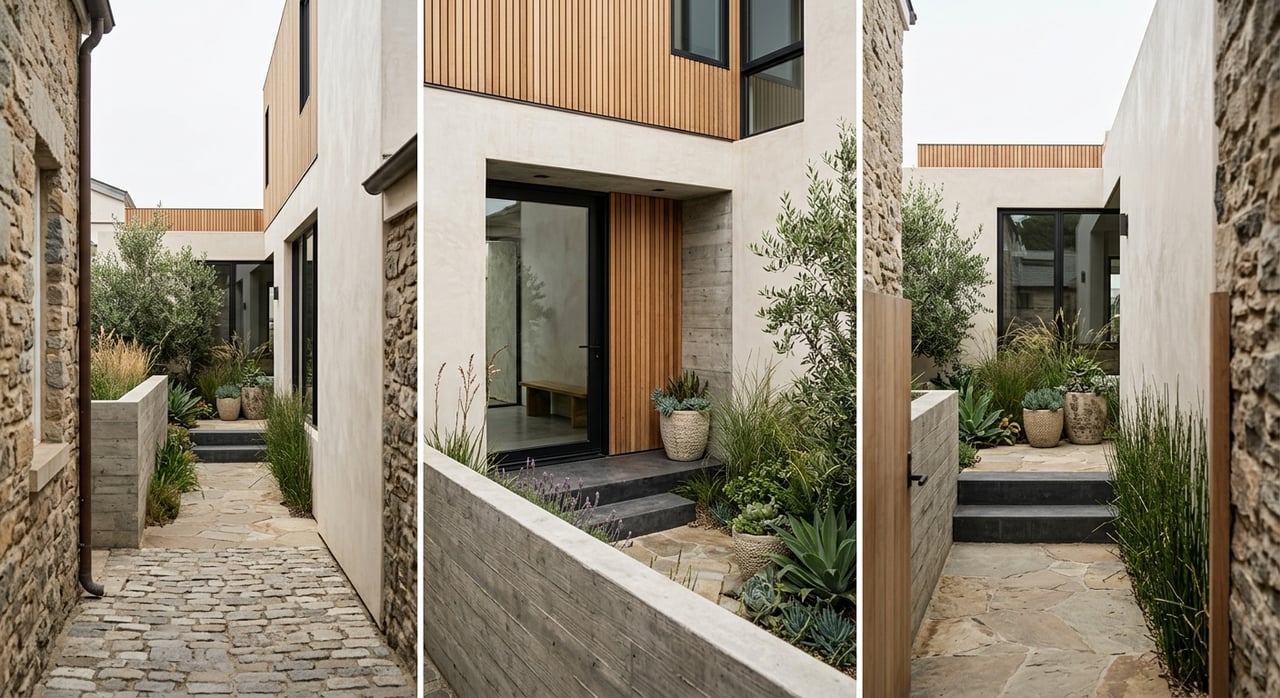
Venice’s walk streets are one of its most distinctive residential features. City planning materials identify these areas as an important part of Venice’s coastal character, with narrow pedestrian-oriented streets, mature vegetation, and detailed landscaping elements such as walls and fences.
In places like the Milwood Walk Streets Historic District, the housing is mostly modest one- and two-story single-family residences. SurveyLA also notes that early walk-street areas preserve Craftsman, Period Revival, and vernacular styles.
If your ideal neighborhood includes a more intimate streetscape and a strong pedestrian feel, the walk streets deserve a closer look. These blocks often feel calmer and more tucked in, while still being part of the broader Venice fabric.
For buyers, this can be a useful way to narrow your search. Instead of asking only how close you are to the beach, it helps to ask how you want your immediate surroundings to feel when you step outside.
Ocean Front Walk is the most public-facing part of Venice. It is known for people-watching, street performers, artists, specialty shops, restaurants, and uniquely designed residences, while the beach area also includes amenities like Muscle Beach, tennis courts, volleyball courts, the bike trail, and bike and skate rentals.
This part of Venice has the most active and visitor-heavy energy. If you love being close to beach activity, public spaces, and a constant stream of movement, that can be a major draw.
Living near the boardwalk usually means embracing a more public setting. The appeal is easy access to the sand, bike path, and outdoor recreation, along with Venice’s most recognizable street life.
For some buyers, that energy is the point. For others, it helps to enjoy the beach nearby while focusing their home search a little farther inland.
Abbot Kinney Boulevard is a pedestrian-oriented commercial spine and one of the key lifestyle anchors in Venice. It is widely known for art, furniture, jewelry, clothing, restaurants, galleries, wine shops, and nightlife.
The nearby Windward Circle area is also identified in the Venice Community Plan as a historic pedestrian-oriented district with retail, restaurants, a hotel, a bank, a post office, and a medical clinic. Together, these areas help show that Venice is not only a visitor destination but also a neighborhood with everyday functionality.
If you want to be close to dining, retail, and a lively street scene, this part of Venice may feel like a natural fit. It can appeal to buyers who value being able to walk or bike to errands, meals, or local gathering spots.
This area also reflects one of Venice’s biggest strengths: the public realm is part of daily life. Walking and biking are not just lifestyle buzzwords here. Planning materials specifically emphasize protecting walk streets and improving bicycle connections.
Inland Venice often gives you the broadest view of the neighborhood’s housing mix. The community plan notes that Venice includes single-family homes, multi-family dwellings, and mixed-use structures, with an emphasis on preserving varied residential character.
That means you may find older cottages, bungalow courts, small multi-family properties, and newer infill within the same general area. For buyers who want options, this part of Venice can open up a wider range of housing forms and price points.
A practical way to think about Venice housing is by form as much as by style. Common options include:
This variety is one reason Venice can appeal to very different buyers. You can move from a 1920s bungalow court to a bold modern residence without leaving the same larger neighborhood.
Venice has an unusually layered architectural identity. Older pockets include Craftsman and vernacular cottages, while SurveyLA also identifies Period Revival styles that expanded in the 1920s, including American Colonial Revival, Spanish Colonial Revival, Tudor Revival, French Norman Revival, and Streamline Moderne.
At the same time, Venice has a strong modern and postwar design layer. SurveyLA identifies Late Modern and Post Modern examples, and the LA Conservancy highlights highly visible Deconstructivist work by Frank Gehry and Morphosis.
If you care about architecture, Venice gives you more range than many coastal neighborhoods. You are not choosing between only “classic beach cottage” or “new construction.” You may also see attached modern housing, architect-designed condos, and custom homes that reflect the area’s creative history.
That design culture is tied to Venice’s broader identity. SurveyLA notes that artists and Beat-era residents were drawn here in the late 1950s and 1960s, and murals, adaptive reuse, and experimental architecture became part of the neighborhood’s long-term character.
The easiest way to narrow your search is to focus on how you want daily life to feel. Venice works best when you match your priorities to the right pocket instead of trying to evaluate the area as one single experience.
Here is a simple framework to use:
This kind of clarity can save time and reduce second-guessing. It also helps you compare homes based on real lifestyle fit, not just square footage or distance to the beach.
If you are serious about buying in Venice, try visiting more than once and at different times of day. A pocket that feels relaxed on a weekday morning may feel very different on a weekend afternoon.
As you tour, pay attention to what you notice first. Are you drawn to foot traffic, quiet residential streets, architecture, bike access, or proximity to restaurants and public spaces? Those patterns usually tell you more than a listing description ever will.
Because Venice has so many micro-neighborhoods, small location details can shape your experience in a big way. The right fit is often less about the broad neighborhood name and more about the exact block, housing type, and surrounding streetscape.
That is where a calm, local, high-touch approach can make a real difference. When you understand the tradeoffs clearly, you can move forward with more confidence and a lot less noise.
If you’re thinking about buying or selling in Venice and want practical guidance tailored to your goals, Lisa Potier offers the kind of thoughtful, neighborhood-specific support that helps you make informed decisions without pressure.
Stay up to date on the latest real estate trends.
October 15, 2026
October 8, 2026
October 1, 2026
September 24, 2026
September 17, 2026

September 10, 2026
September 3, 2026
August 27, 2026
August 20, 2026
Whether you’re buying or selling, Lisa offers personalized real estate guidance every step of the way. From evaluating property value to negotiating favorable terms, she is committed to protecting your interests and making the process smooth and stress-free. Reach out today to get started.