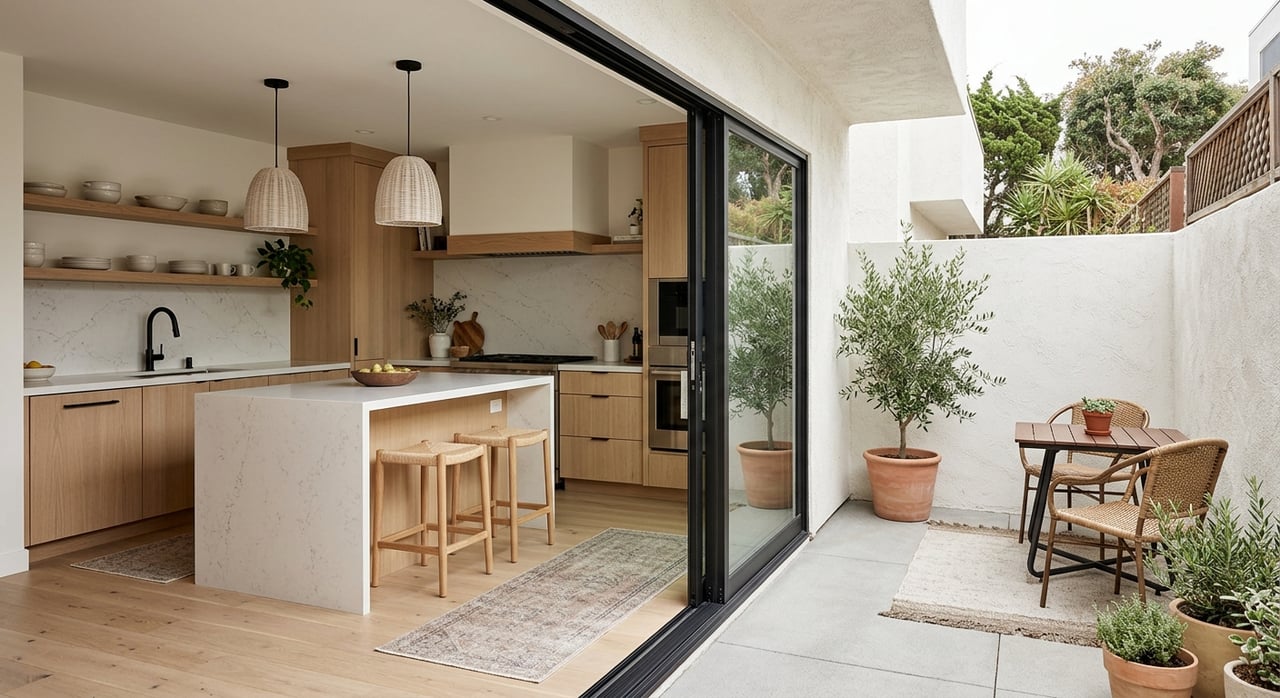
Preparing To Sell Your Santa Monica Home From Start To Finish
June 4, 2026
June 4, 2026
If you are thinking about selling in Santa Monica, it is easy to assume the process is simple: clean up the house, pick a price, and hit the market. In reality, Santa Monica sellers often need to balance pricing, prep work, permits, disclosures, and presentation all at once. The good news is that with the right plan, you can avoid last-minute stress and launch with confidence. Let’s dive in.
Santa Monica is a small city at just 8.3 square miles, but pricing can vary dramatically by neighborhood. As of May 2026, the citywide median listing price is $1,595,000, with 366 active listings and a median 45 days on market. Homes are also selling for about 1.76% below asking on average.
That citywide snapshot is helpful, but it should not be your pricing strategy by itself. Neighborhood figures vary sharply, with median listing prices around $939,000 in Pico, $1,599,000 in Ocean Park, $2,195,000 in Downtown Santa Monica, and $4,522,500 North of Montana. Days on market also range widely, from 34 days in Pico to 87 days in Downtown Santa Monica.
What that means for you is simple: your home should be priced against the right neighborhood and property type, not against Santa Monica as a whole. A condo near Downtown will compete differently than a single-family home in North of Montana or a property in Ocean Park.
One of the biggest mistakes sellers make is waiting too long to prepare. In Santa Monica, even small projects can affect your launch date if you need contractors, HOA approval, or city permits.
A smoother timeline usually looks like this:
That step-by-step approach matters in a market with active competition and meaningful neighborhood differences. When your listing is fully prepared from the start, you are in a better position to support your price and make a strong first impression.
Pre-listing repairs do not have to mean a full renovation. In many cases, the smartest updates are the ones that remove buyer objections and improve how the home shows online and in person.
A pre-sale inspection is optional, but it can help you spot issues before the property goes live. Common areas to review include the structure, exterior, roof, plumbing, electrical, heating and cooling systems, interiors, ventilation or insulation, and fireplaces.
For lighter prep, focus on visible improvements first. Cleaning windows, carpets, walls, and lighting fixtures, decluttering rooms, and refreshing the front entrance or landscaping can create a meaningful difference without taking on a major project.
It also helps to gather warranties, guarantees, and manuals for appliances or systems that will stay with the property. Buyers appreciate organized records, and having them ready can make the transaction feel more polished and complete.
Santa Monica is a permit-sensitive city, so repair planning should happen early. The city uses a paperless permit process, and application materials must be uploaded before a counter visit.
Permits may be issued to a licensed contractor, an authorized agent, or a residential owner in certain cases. Some smaller projects, such as reroofs, mechanical installations, facade repairs or remodels, and patio covers, may qualify for same-day review. Larger scopes typically go through plan review.
If you wait until just before photos or showings to address repairs, permit questions can delay your schedule. It is usually much easier to confirm what is required at the beginning rather than trying to solve it in the final week before launch.
If you are selling a condo or townhome, your prep list is longer. Any exterior or common-area work may require HOA authorization before permits can be issued.
Santa Monica guidance says condominium and townhome projects in common areas or on exteriors need authorization from the HOA president, along with documentation verifying that person’s position. In some cases, the city can also accept authorization from all condominium owners.
That means condo and townhome sellers should start early on both repair planning and document collection. If the HOA package, approvals, or maintenance records are delayed, your listing schedule can slip.
In California, disclosures are a major part of the sales process, and they are best handled before the home is marketed. For many single-family residential sales, the Transfer Disclosure Statement is required and serves as a disclosure of condition, not a warranty.
Natural hazard disclosures are separate and cover issues such as flood, earthquake fault, and fire severity zones where applicable. California also now requires some sellers who took title within the previous 18 months to disclose contractor-performed work, the contractors’ names, and copies of permits for certain additions, modifications, alterations, or repairs.
If you renovated recently, this is an especially important records check. Gathering permits, invoices, and contractor details early can save time later and reduce the chance of avoidable surprises during escrow.
Not every Santa Monica sale follows the same prep path. Your checklist should match the type of property you own.
Single-family sellers should pay close attention to:
Condo and townhome sellers need all of the above, plus HOA-related items. California Civil Code section 4525 requires an association document package that can include governing documents, recent financial and assessment information, and notices of unresolved violations.
Under section 4530, the association must provide requested documents within 10 days. Even so, it is wise to request them early so your launch is not held up waiting on paperwork.
Santa Monica has many long-held and higher-value homes, so estate and trust sales are not unusual. If your sale involves a trust, estate, probate, or tax question, it is important to raise those issues early so you can confirm what information and documents will be needed.
This is also where a calm, organized prep process can make a big difference, especially if you are selling from out of the area or managing the home on behalf of a family member.
Before you decide on a list price or estimate your net proceeds, make sure you understand local transfer taxes. In Santa Monica, both city and county documentary transfer taxes apply.
The city rate is $3 per $1,000 for sales under $5 million, $6 per $1,000 from $5 million to $7,999,999.99, and $56 per $1,000 at $8 million and above. There is also a county rate of $0.55 per $500.
For higher-priced properties, this can have a major impact on your net. Running those numbers early can help you make better pricing and timing decisions.
If you are selling an older multi-family property, seismic compliance should be reviewed before listing. Santa Monica’s seismic retrofit program has identified more than 2,000 potentially vulnerable commercial and multi-family structures, and the city reported 65% overall completion or compliance by June 2025, including 67% of soft-story multi-family residential structures.
If your building may fall within that program, verify its status early. Buyers will want clarity, and it is much better to address the issue before the property hits the market.
In Santa Monica, presentation matters. This is a highly visual coastal market, and buyers often form their first impression online.
Staging can help buyers picture how the home will live. In 2025, 83% of buyers’ agents said staging made it easier for buyers to visualize a future home, and the rooms most often staged were the living room, primary bedroom, dining room, and kitchen.
Photos matter just as much. Listing photos were rated as the most useful online search feature by 81% of buyers, and the first image often shapes how the rest of the listing is perceived.
For Santa Monica homes, strong marketing assets often include:
This is not about overproducing the listing. It is about making sure the condition, pricing, and presentation all support each other from day one.
Santa Monica draws more than 8 million visitors a year, with about 3 miles of Pacific beaches and a daytime population that rises to roughly 250,000. That means many buyers are paying attention to practical lifestyle details, not just square footage.
Depending on the property and location, features like walkability, parking, access, outdoor space, low-maintenance finishes, and neighborhood context may deserve special attention in the listing strategy. Homes closer to the beach, the Pier, or Downtown may benefit from thoughtful presentation around those details.
The key is to stay accurate and specific. Your marketing should reflect what your home truly offers and how it fits within its immediate Santa Monica setting.
In a market with 366 active listings and notable differences by neighborhood, a half-ready launch can work against you. If photos go live before repairs are finished, or if disclosures and HOA documents lag behind, buyers may hesitate or move on.
A stronger approach is to launch with the full package in place. That means repairs are done, paperwork is assembled, staging is complete, and photography and video are ready before the listing hits the market.
That kind of preparation does more than reduce stress. It helps you present the home clearly, price it realistically, and create a smoother experience once showings and offers begin.
Selling in Santa Monica is rarely just about putting a sign in the yard. It is about understanding your micro-market, preparing the property thoughtfully, and handling the details early so the launch feels seamless. If you want a calm, hands-on approach to pricing, prep, staging, and vendor coordination, Lisa Potier can help you move forward with confidence.
Stay up to date on the latest real estate trends.
October 15, 2026
October 8, 2026
October 1, 2026

September 24, 2026

September 17, 2026

September 10, 2026
September 3, 2026

August 27, 2026
August 20, 2026
Whether you’re buying or selling, Lisa offers personalized real estate guidance every step of the way. From evaluating property value to negotiating favorable terms, she is committed to protecting your interests and making the process smooth and stress-free. Reach out today to get started.